
Skin Fade vs Fade Cut: What's the Difference?
Walk into any barbershop in Perth and you'll hear two words tossed around as if they mean the same thing: skin fade and fade cut. They don't. The difference comes down to one variable — how short the clippers travel before the taper begins — and it changes everything from your maintenance schedule to which face shapes the cut flatters.
This guide is written by working barbers, not bloggers. We cut hundreds of fades a week between our Greenwood and Currambine shops, and the questions in this article are the ones we answer at the chair every day.
The short answer
A fade cut is any haircut where the hair length transitions gradually from longer on top to shorter on the sides and back, blended without visible steps. A skin fade is one specific type of fade — the one that's blended all the way down to bare skin at its shortest point.
Put another way: every skin fade is a fade cut, but not every fade cut is a skin fade.
What is a fade cut?
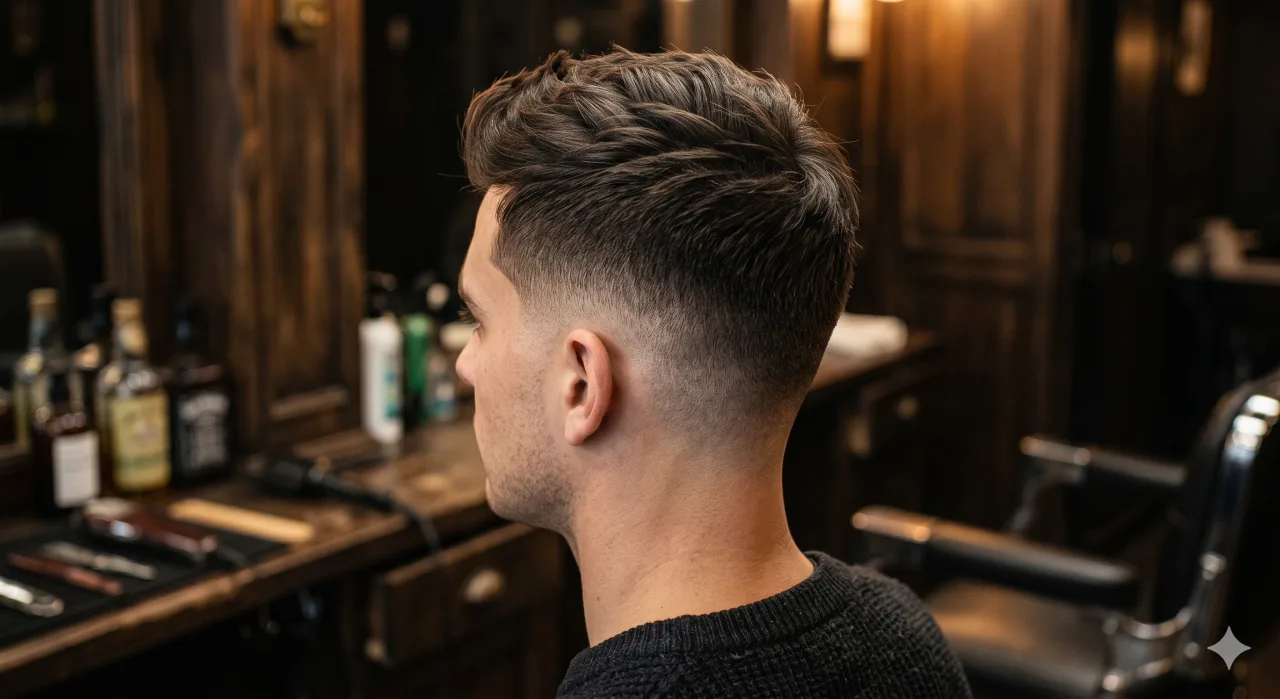
A traditional fade is built on clipper guards. Your barber starts with a longer guard at the top of the fade line and steps down — typically through #4 → #3 → #2 → #1 — finishing with a tight #1 or #0.5 around the natural hairline. Done well, you can't see where one guard ends and the next begins. The transition reads as a single smooth gradient.
Because the shortest length is still hair (not skin), a regular fade is more forgiving. Small inconsistencies blend into the texture. The cut grows out gracefully — by week three or four it just starts to look like a longer, softer version of itself.
Variations of the standard fade
- Low fade — the taper begins just above the ears and follows the natural hairline. Conservative, professional, suits any face shape.
- Mid fade — the taper starts halfway up the side of the head. The most popular variant — sharper than low, more wearable than high.
- High fade — the taper begins at or above the temple. Maximum contrast between top and sides; demands a strong jawline.
- Taper fade — a subtle version that only fades the area around the ears and neckline, leaving the bulk of the sides at uniform length.
What is a skin fade?
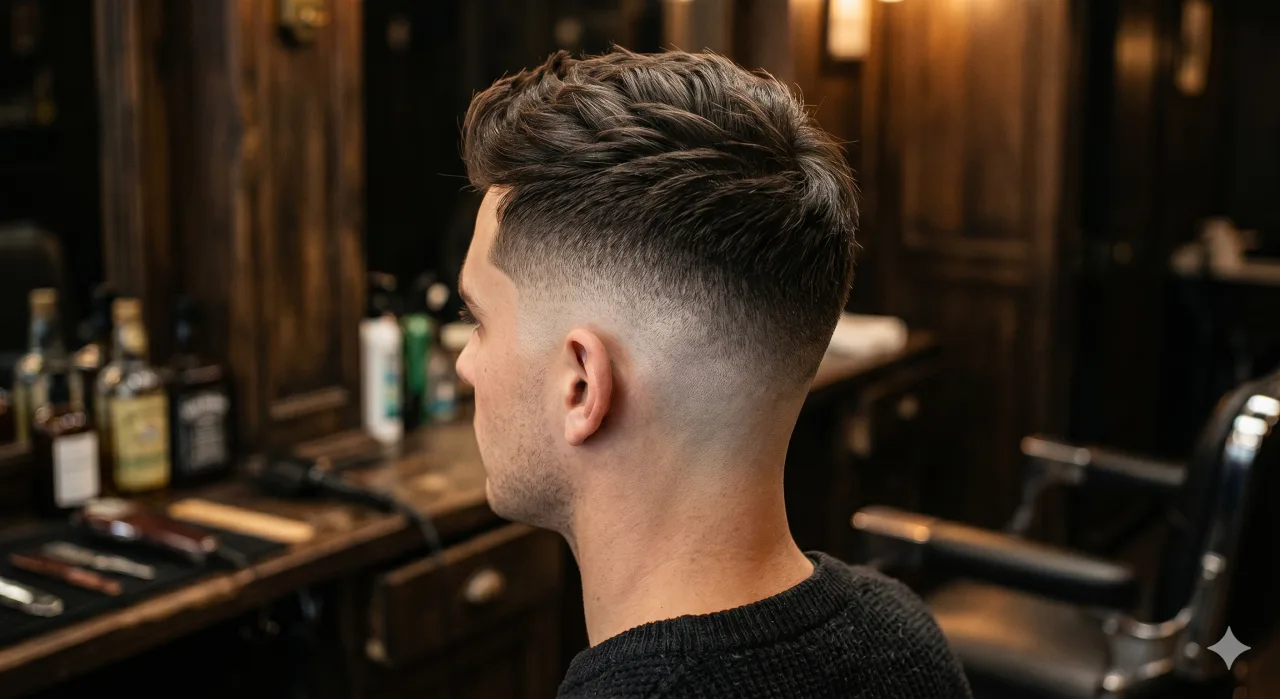
A skin fade — sometimes called a bald fade or zero fade — is a fade where the shortest section is taken to skin using a foil shaver, T-blade, or open clipper after the guard work is done. The result is a perfectly clean transition from hair into bare scalp.
Technically harder than a regular fade. The skin section has to be evenly shaved without leaving razor lines, the blend up into the first hair length has to be invisible, and any neckline imperfection shows. This is why a skin fade typically takes 30–45 minutes versus 20–30 for a standard fade — and why our pricing reflects it.
Side-by-side: when to choose each
| Factor | Skin Fade | Fade Cut |
|---|---|---|
| Shortest length | Bare skin (0) | #1 or #0.5 guard (~3 mm) |
| Maintenance window | 2 weeks | 3–4 weeks |
| Visual contrast | Maximum | Moderate |
| Grow-out look | Visible regrowth line within days | Soft, even grow-out |
| Time in chair | 30–45 min | 20–30 min |
| Forgiveness | Low — every flaw shows | Higher — texture hides minor variation |
Which is better for your face shape?
Face shape matters more than people realise. The fade height changes the visual proportions of the head — get it wrong and a great cut still looks off.
- Round faces: A high skin fade adds vertical length and counters the roundness. Avoid low fades — they emphasise width.
- Long or oval faces: Stick with a low or mid fade. A high skin fade exaggerates the vertical line.
- Square or angular faces: Both work. A mid fade — skin or guarded — flatters the strong jaw without competing with it.
- Heart-shaped faces: Low fade with more length on top to balance the wider forehead.
How often should you book?
Hair grows roughly 1.25 cm per month. The shorter your fade's bottom point, the more visible regrowth becomes. Realistic schedules:
- Skin fade: every 10–14 days for that "fresh" look. Push it to three weeks and the bare-skin section is already shadowed with stubble — the contrast is gone.
- Standard fade: every 3–4 weeks. The grow-out is gradual, so it stays presentable for a fortnight after each cut.
If you can't commit to fortnightly visits, a guarded fade is the smarter choice. We'd rather you get a cut that still looks sharp three weeks in than a skin fade that looks tired by week two.
Hair type and texture considerations
Texture changes how each cut sits.
- Straight, fine hair: A skin fade gives more visual definition where a guarded fade can blur into the scalp. We see this often.
- Thick, coarse, or curly hair: Either works beautifully. The natural density makes the contrast between top and bottom look intentional regardless of which you choose.
- Receding or thinning hairlines: A skin fade can be unforgiving here — the bare-skin section can read as more scalp showing through. A low or taper fade is usually a better call. We'll be honest with you at the consultation.
Pricing at The Fade Lounge
Both cuts are part of our standard service menu. The skin fade carries a small premium because of the additional time and skill required to finish the bare-skin section cleanly. See current pricing on the services page or call your local shop — Greenwood or Currambine — for any questions before booking.
Bottom line
If you want the sharpest, most contemporary look and you can commit to coming in every two weeks, the skin fade is the right call. If you'd rather a cut that holds its shape for the full month, a classic fade is the safer choice. Either way, the most important variable isn't the haircut — it's the barber's skill at blending. Both cuts live or die on technique.
If you're still not sure which to book, mention it at check-in. Our barbers will look at your hair type, face shape, and how often you can realistically come back, then recommend what'll actually look best on you — not just what's trending on Instagram.
Ready for Your Perfect Fade?
Book your appointment at one of our Perth locations today.